If your home is in a conservation area, new sash windows may need the council’s approval, and its conservation officer will look closely at what you choose. Roseview, who make the uPVC sash windows we fit, have set out what officers tend to look for. Here’s what it means if you’re replacing yours.
Check these first
- Are you in a conservation area, and is there an Article 4 Direction? Your council’s website should show both. An Article 4 Direction can mean that even like-for-like replacement windows need planning permission.
- Talk to the planning team early. Before you commit to anything, not after.
- See a sample. Joints, rails and finishes are much easier to judge in person than from a photo or drawing, for you and for the conservation officer.
- Be wary of guarantees. Every council and every officer is different, so no one can promise you an approval.
Our guide to planning permission for windows and doors covers the wider rules, including listed buildings.
Seven things conservation officers look at
1. Proportions
The balance between the top sash, the bottom sash and the frame. When an officer says a new window “doesn’t match the original”, proportion is usually the reason.
2. The meeting rail
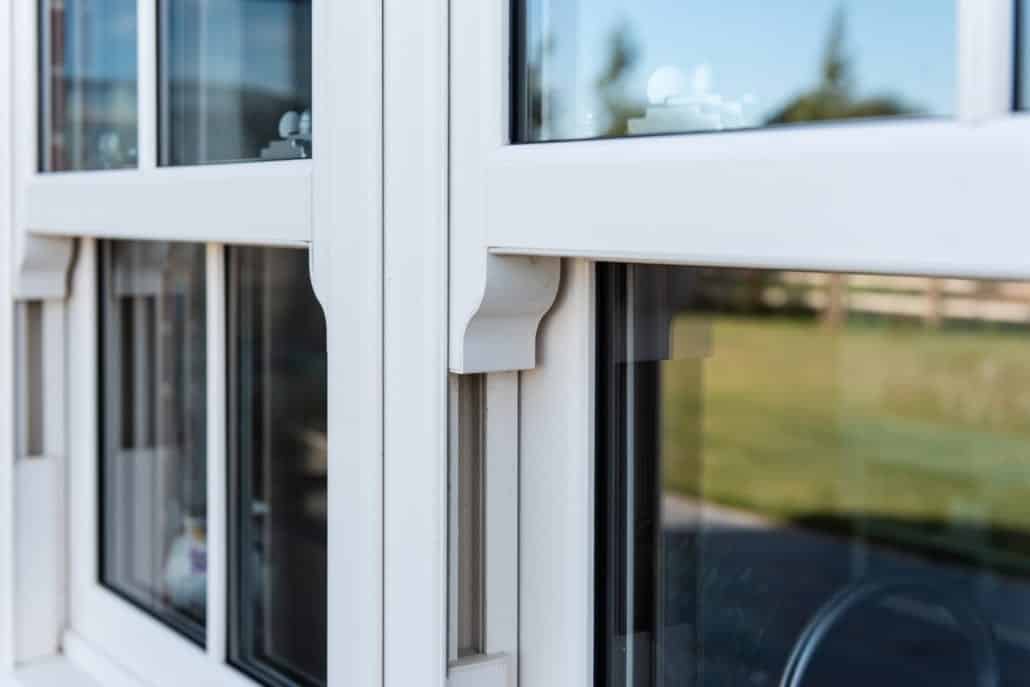
The rail where the two sashes meet. On an old timber sash it’s slim. A wide, chunky meeting rail is one of the quickest giveaways of a modern window.
3. The step between the sashes
Where the sashes meet, the outer sash sits in front of the inner one. Keep that step small and the window looks like timber; make it deep and it looks out of place. Roseview says a step of more than about 15mm is clearly visible, and its Ultimate Rose model keeps it to 10mm.
4. Sightlines
How much frame you see compared with glass. A window with noticeably less glass than its neighbours stands out from the street.
5. Corner joints
Welded corners leave a visible seam. Mechanical joints, like the ones on a traditional timber sash, don’t.
6. Sash horns
The small projections at the bottom of the top sash. Horns that are part of the sash look authentic. Horns that are stuck on afterwards give the game away.
7. Glazing bars and finish
Glazing bars should look fixed and cast a proper shadow line on the glass. Woodgrain and chalky, matt-look finishes are closer to painted timber than shiny white.
And one more: how it’s fitted
A frame set too far forward in the opening loses the shadow around it and flattens the front of the house. That’s down to the survey and installation rather than the window itself, which is why we survey every opening before anything is made.
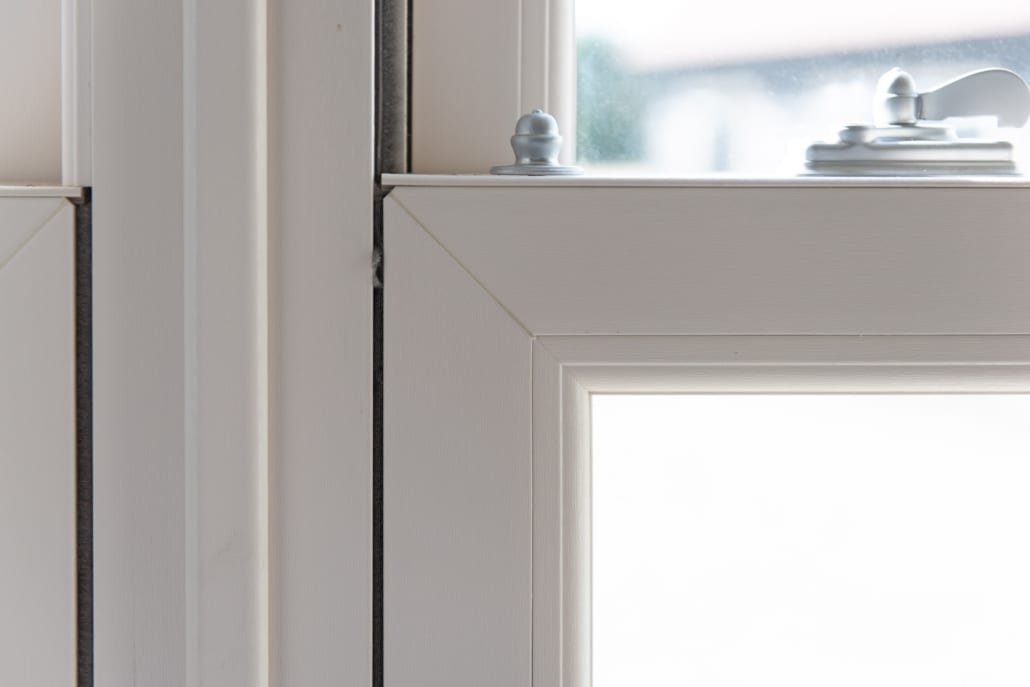
The details that make the difference
Individually these are small, but together they decide whether a window looks traditional. Roseview’s Ultimate Rose offers several options:
- Sash horns in different styles, from the classic Dolphin to the more decorative Seahorse and Emperor. Choosing the one that matches your existing windows makes a noticeable difference.
- External chamber covers, which hide the balance chambers at the sides for a cleaner, more traditional look.
- Internal staff beads, a traditional finishing detail on the inside of the window.
- Deep cills, to get the proportions right on different styles of house.
Ultimate Rose won Best Sash Window at the 2024 Build It Awards, and has been shortlisted for Best Windows at this year’s awards.
Timber or uPVC?
Many conservation areas accept a well-made uPVC sash, but some councils, and most listed buildings, will want timber. We fit both: Roseview uPVC and Bereco timber. Our guide to sash windows: timber or uPVC? compares them.
Next steps
See our sliding sash windows and recent projects such as Field of vision in Tendring. Then come and look at the details in person at our showroom at 38 Heckworth Close, Colchester, where we have a Roseview Ultimate Rose and a Heritage Rose sash on display.
When you’re ready, get an estimate. Qualifying installations are registered with CERTASS.
With thanks to Roseview for their guidance on what conservation officers look for.